
An aging wastewater liftstation is situated in a municipality. The pumps are at the final stage of their life and the controls are dated, as well as the access hatch has worn out. The concrete wet well is sturdy and solid.
Should the entire station be demolished and rebuilt? Not necessarily. It is essential to inquire if the system already in place is capable of supporting the modern pumping system without compromising future capacity as well as reliability or access.
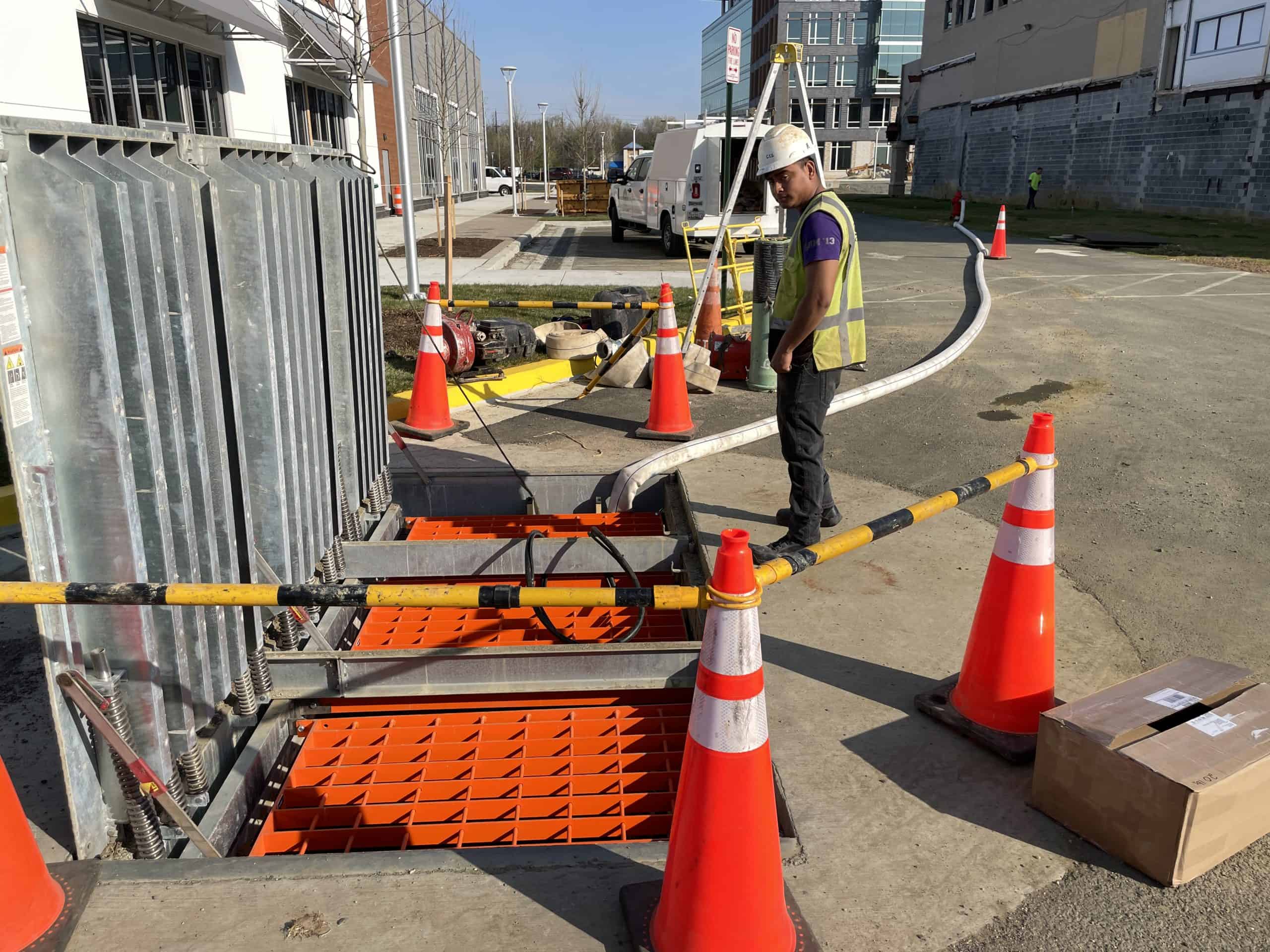
Image credit: romtecutilities.com
The retrofitting of pumps that are carefully designed can save valuable infrastructure and also replace components that no longer meet functional requirements.
Begin with the structure that nobody wants to replace.
It’s expensive and difficult to replace the wet well because it is in the ground and connected to pipes and essential for wastewater collection.
Retaining the concrete structure may reduce excavation work and construction.
However, damage to the hatch could complicate the decision. Romtec Utilities says that wet well hatches are usually replaced as part of retrofits. It might be more reliable to repair the top slab instead of constructing a new hatch on concrete that has deteriorated. This method can be used to increase accessibility and enhance the functionality of the structure, without needing to rebuild the whole wet well.
A new pump improves the engineering
Imagine that the area of residence has exploded in size since the original lift station installation. The pumps that are in place may not be adequate for increased flows of wastewater.
Pumps with higher horsepower could be used to improve the pumping station, however the equipment should also be incorporated within the system. To make the pumps more powerful there is a possibility that you will need change the discharge elbows or pipe. You may also need to alter electrical controls and valves.
The engineers must also assess the hydraulic requirements of the system, such as the flow rate as well as the dynamic head total. Installation of a larger pump without evaluating the situation can cause more problems than it resolves. The planning of future capacity at the initial design stage can simplify future expansion.
Make sure that the wastewater is kept moving during Construction
Retrofitting an existing wastewater pump station could be a new challenge. In contrast to other replacement projects, this one will require continued operation for the duration of construction.
It is still a problem for wastewater to enter the system even when contractors are in the process of working. Depending on the project the temporary bypass pumping might be required to keep service while existing equipment is taken away and new components are put in place.
Romtec Utilities embraced this difficult task in the Federal Law Enforcement Training Center, Brunswick, Georgia.
The project consisted of replacing two aging wastewater lift stations while maintaining operations at the facility. The project was able to adapt to existing station footprints as as operational requirements by using customized engineering on site and modular replacement systems. The example illustrates why the sequence of construction should be considered prior to the installation process begins.
If you decide to replace, it is the best Choice
Some stations are not suitable for rehabilitation. A severely deteriorated wet well, inadequate structural capacity, or major changes in hydraulic requirements may make sewer lift station replacement more appropriate than modifying the existing installation.
When making a choice, it is essential to think about the structural integrity of the structure, its compatibility with equipment, the accessibility to construction sites, service continuity and long-term needs. Romtec Utilities begins retrofit and replacement projects by identifying which components will remain and which will require replacement.
From there, the business creates engineering solutions that are specific to the site, preliminary designs, and budgetary estimates. Prefabricated components also aid in facilitate installation and cut down on building requirements that are required on-site.
The Project is not Completion until the Pumps Have Beginning
Modern lift stations must be able to function as an integrated system. Prior to returning a lift station to normal service, startup testing, commissioning, and testing of equipment is required to make sure that all pumps, controls, and related equipment operate in accordance with their design.
Both manuals and training for operators are equally essential. Maintenance workers must be aware of the new equipment, operating procedures and other documentation before they take over responsibility for the station.
Retrofitting infrastructure can preserve its value while addressing limitations that led to modernization.
Municipalities and facility owners must consider more than immediate repairs. Most successful projects blend new equipment with existing structures. They provide essential services during construction and set up the pumping system for years of continuous operation.